


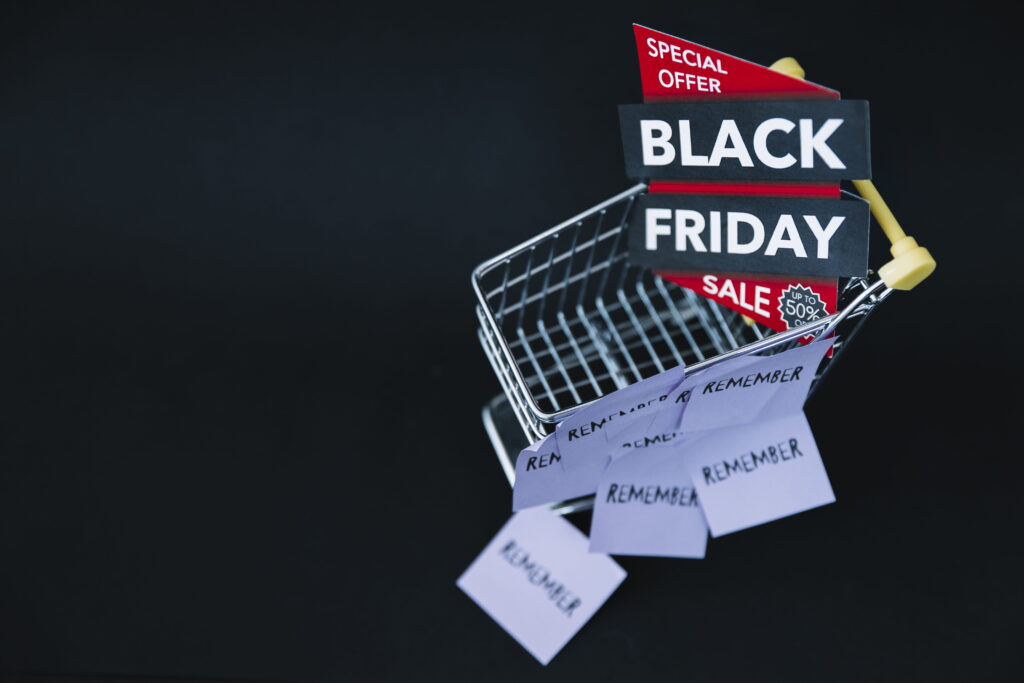
Your Black Friday logistics get tested when several days’ worth of sales land in a few hours. Having stock on hand is only the start: you also need the capacity to pick, pack and hand orders over to the carrier within the delivery window you promised.
If your campaign is already running, focus on checking real capacity, spotting bottlenecks and agreeing what to do when orders exceed the forecast. This checklist helps you organise those decisions.
1. Turn the sales forecast into workload
A monthly estimate isn’t enough to organise a warehouse. Break demand down by day and, on the busiest days, by time slot. Combine the history you have with planned promotions, featured products and the typical number of units per order.
Then translate orders into operations: lines to pick, units to check and parcels to close. Preparing a single-item order isn’t the same job as preparing one with five products and personalisation.
- Expected scenario: the volume you expect to handle with confirmed resources.
- Peak scenario: the increase that requires extra staff, workstations or collections.
- Contingency scenario: the level at which you need to review delivery times for new orders.
Name one person who is responsible for approving each change. There’s little point in spotting saturation if nobody can change the delivery promise or arrange extra help.
2. Check the capacity of your slowest process
A warehouse can only move as fast as its bottleneck. You may have enough pickers and still pile up orders because there aren’t enough packing stations or because the carrier’s collection capacity is lower.
Illustrative example: if 300 orders an hour are picked but only 220 can be packed, your outbound capacity isn’t 300. Before adding pickers, look at how to strengthen packing and dispatch. These figures are indicative and should be replaced with measurements from your own operation.
Also check location replenishment, label printing, consumables and the space set aside for packed orders. An aisle blocked by parcels waiting for collection can slow down the next shift.
3. Check available stock before launching promotions
Distinguish between goods physically in the warehouse and units available to sell. Stock that is reserved, blocked for quality reasons or awaiting receipt shouldn’t feed a promotion as if it were ready to ship.
Pay particular attention to your highest-demand items and the components of bundles. If a promotional box includes three items, the availability of the whole depends on the scarcest component. Coordinating your shop with stock and inventory management helps keep a consistent view of what you hold.
4. Set priorities and cut-off times
Decide which orders go out first and on what basis: delivery commitment, service purchased or validation date. Don’t let urgent cases be handled through informal requests that keep interrupting picking.
The cut-off time should leave room to validate payments, pick, check, pack and load. Confirm the carrier’s schedules and collection capacity; a label that has been created doesn’t mean a parcel has been collected.
Document these rules in your ecommerce order management and make sure customer service knows the same deadlines.
5. Prepare an incident protocol
Decide before the peak what to do if a unit is missing, an integration fails or a collection is late. The protocol should say who steps in, which orders are put on hold and when the buyer is informed.
- Set up a clearly identifiable queue for orders with incidents.
- Check the fallback procedure for printing and data transmission.
- Confirm which transport alternatives are actually available.
- Prepare delivery-update messages that explain the situation clearly.
An alternative has to be agreed before you need it. Switching service in the middle of a surge without checking coverage, cost and collection can add new problems.
6. Keep track of the backlog during the campaign
Review pending orders several times a day, along with the age of the oldest one and the shipments that may miss their commitment. Also measure picking errors and ready orders that are still waiting for collection.
When inbound orders consistently exceed outbound, switch to the expected scenario. Keeping a promise the warehouse can no longer meet pushes the problem onto the customer and the support team.
Final Black Friday checklist
- Daily forecast and responsible people confirmed.
- Capacity measured for picking, packing and dispatch.
- Sellable stock and promotion components checked.
- Consumables, workstations and outbound areas ready.
- Cut-off times and collections agreed.
- Incident protocol and backlog review in place.
Plan your campaign with FR Logísticos
At FR Logísticos we offer ecommerce logistics services covering stock, order preparation, distribution and customer service. Tell us your volumes, products and campaign dates and we’ll look at an operation that fits your needs.